Last updated November 21, 2026
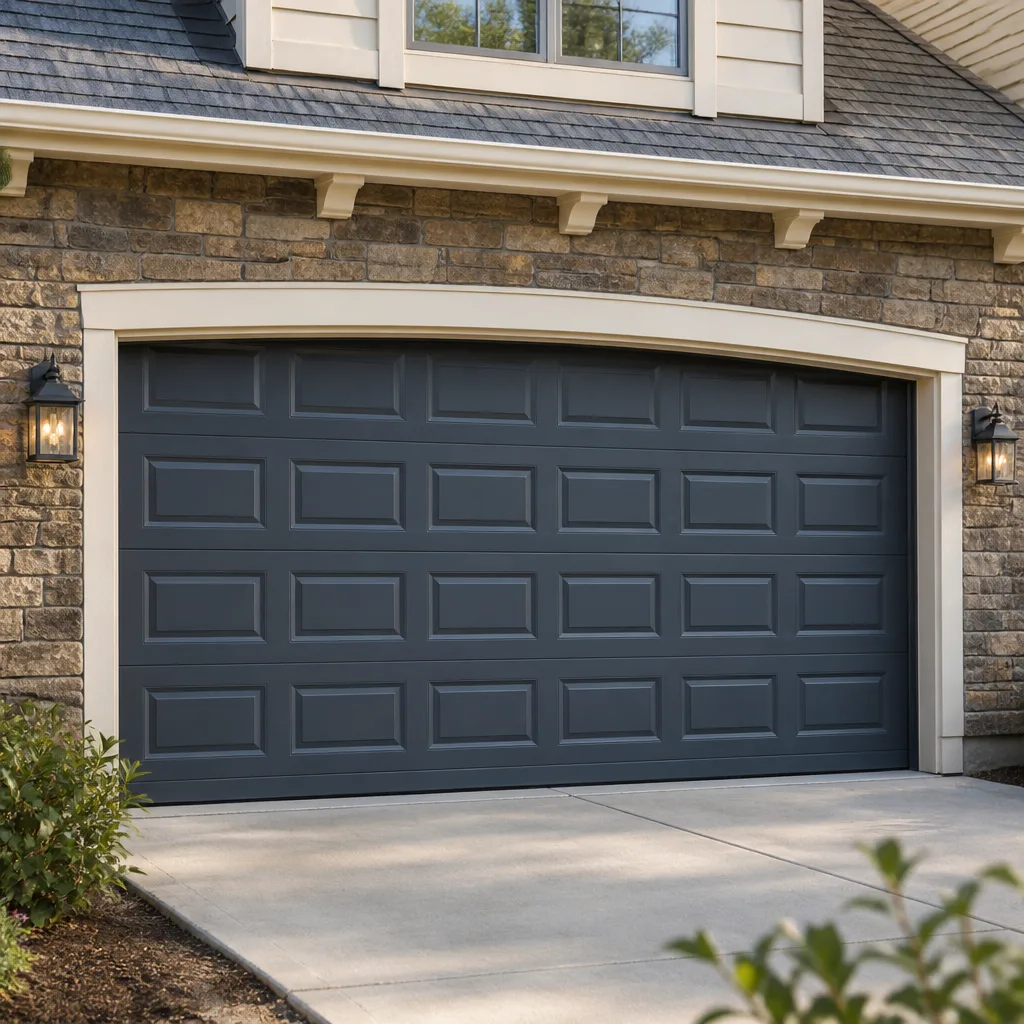 Raised-panel steel
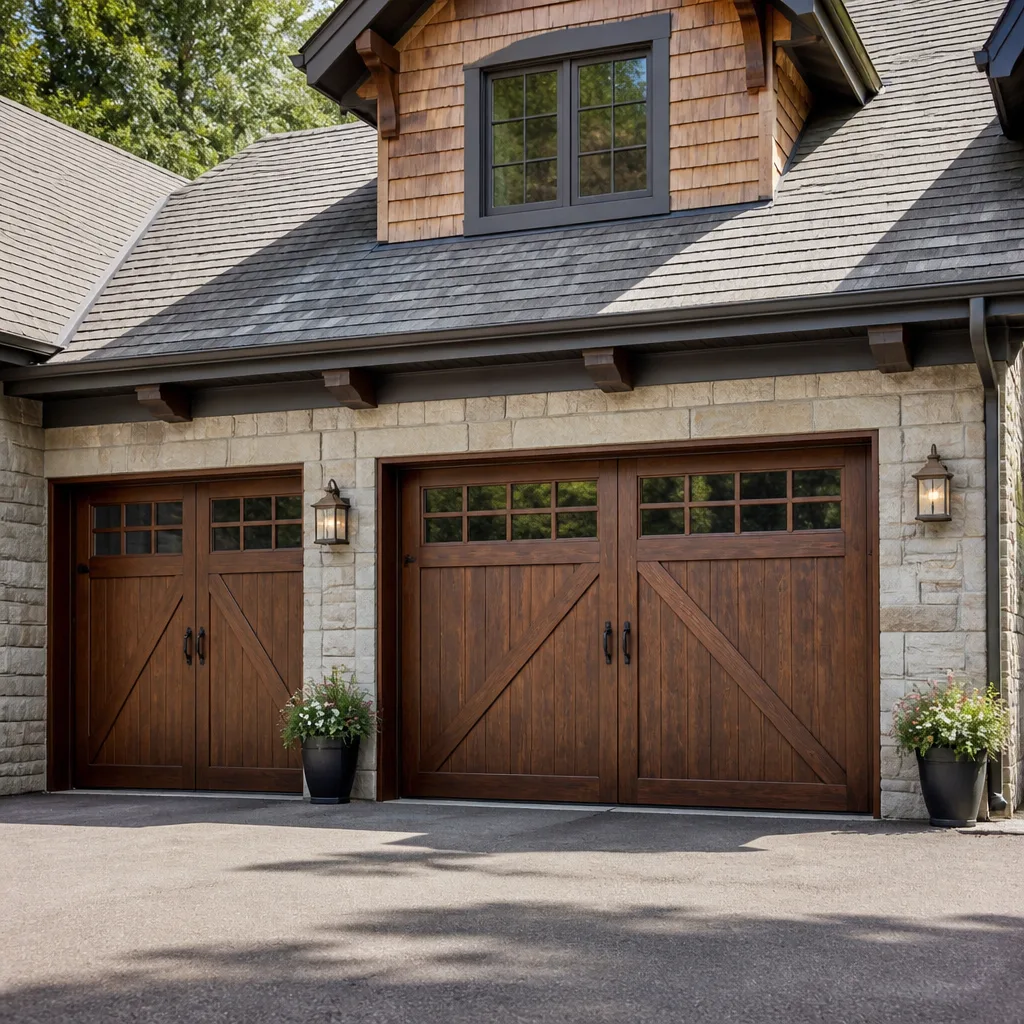 Carriage house
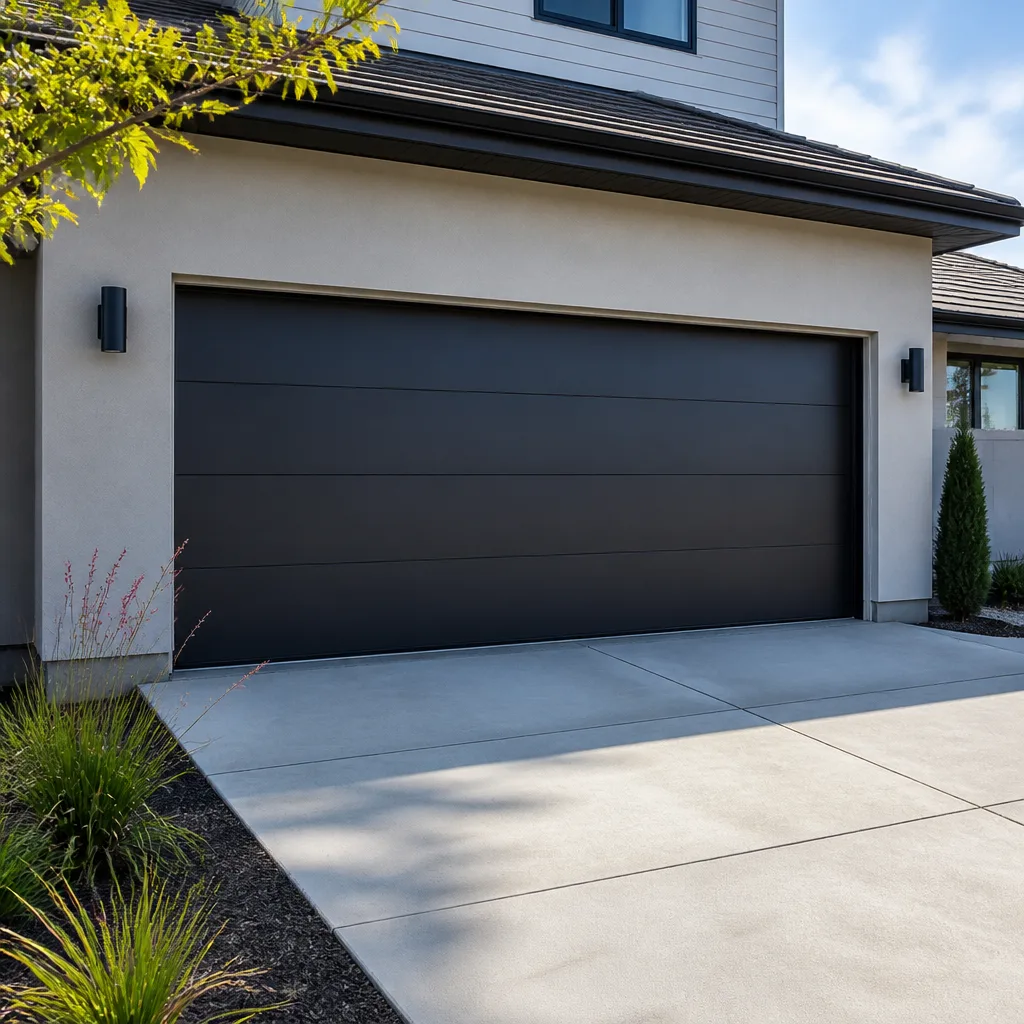 Modern flush
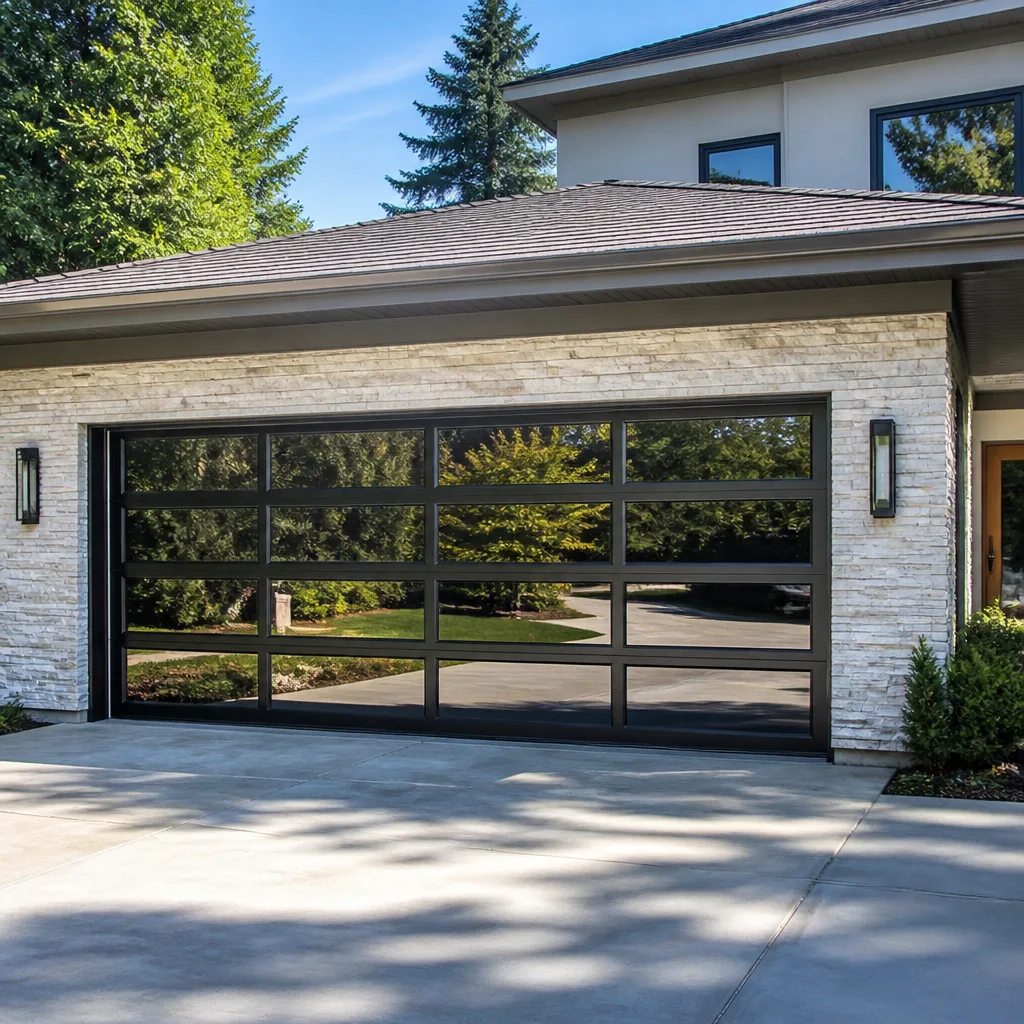 Full-view glass
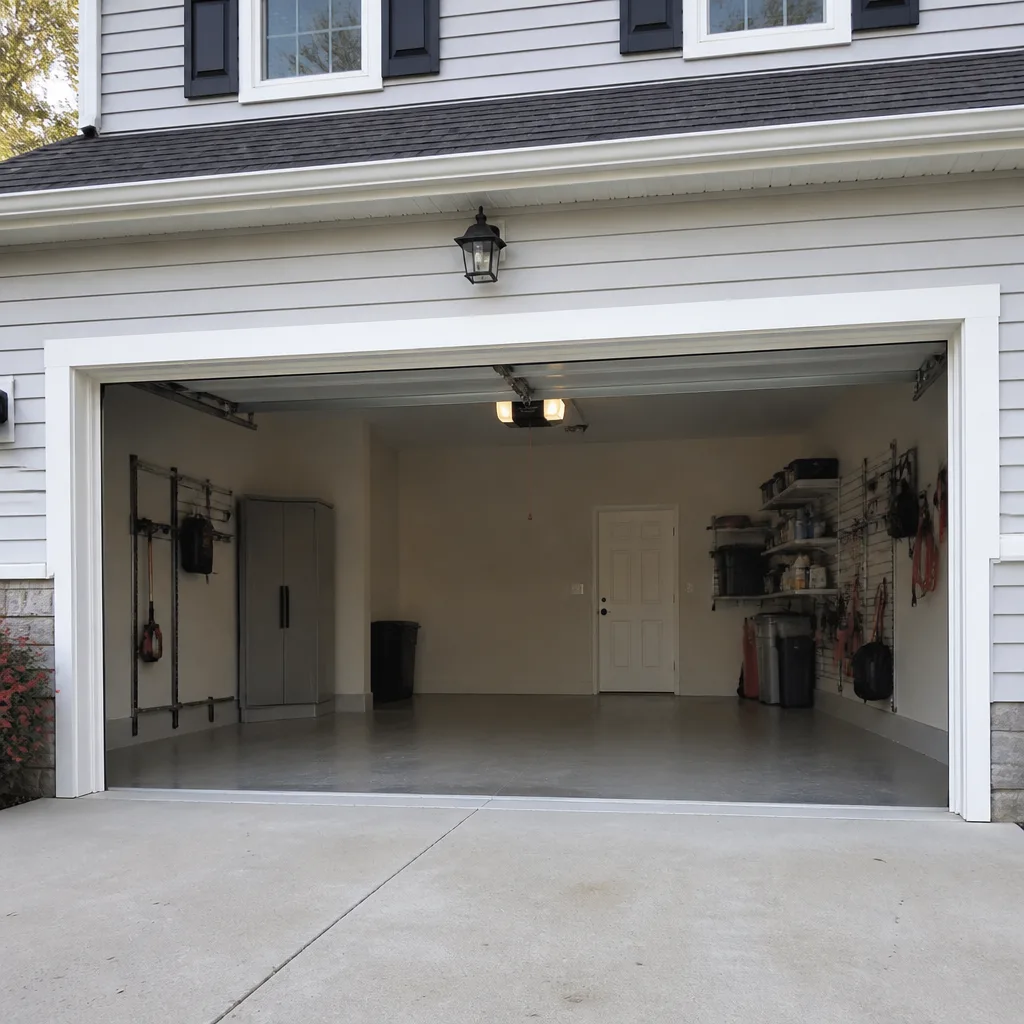 LiftMaster openers
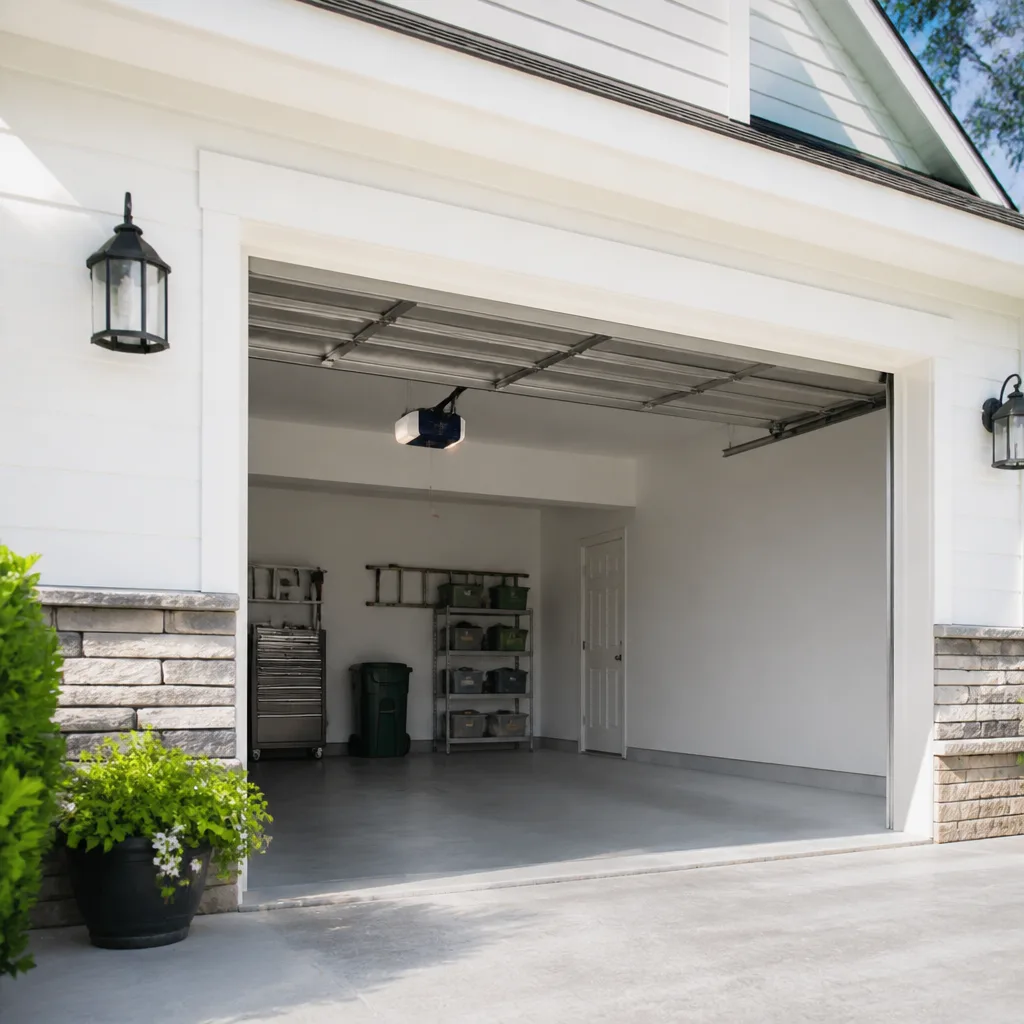 Chamberlain openers
Full 25-point door and opener safety check with every visit - springs, cables, rollers, tracks, and your LiftMaster or Chamberlain opener included
You get a price before we start. It does not change when the pro arrives.
Get your free estimateDIY vs Professional Garage Door: The Oxford Circle Homeowner’s Decision Guide
A torsion spring under full tension stores roughly the same energy as a swinging sledgehammer. That fact alone should reframe how you think about garage door work. The homeowners who replace their own springs aren’t braver or more capable than anyone else – they’re usually less informed about what “going wrong” actually looks like when that stored energy releases. But here’s the flip side most guides won’t tell you: a big chunk of garage door maintenance is genuinely safe for a careful homeowner with the right tools. This guide draws that line precisely. We’ll walk you through which tasks you can handle, which ones carry real injury risk, and where professional work pays for itself. If you’re in Oxford Circle and your door is misbehaving, this is the decision framework we’d want you to have.
Quick Answer
Safe DIY garage door tasks are limited to lubrication, visual inspections, tightening exposed bolts, and replacing remote batteries or photo-eye alignment. Everything involving torsion springs, cables, bottom brackets, or the door’s balance system is dangerous and should be handled by a trained professional. Professional work pays for itself when you factor in emergency call costs, panel damage from improper repairs, and voided manufacturer warranties on brands like Wayne Dalton and LiftMaster.
Styles & brands we work with
- Raised-panel steel
- Carriage house
- Modern flush
- Full-view glass
- LiftMaster openers
- Chamberlain openers
Table of Contents
- Where the DIY Line Actually Is
- Safe DIY Tasks and the Real Skill They Require
- Why Torsion Springs Are Categorically Different
- The Tools You Actually Need (and the Kit You Don’t)
- The Hidden Cost of DIY Mistakes in Oxford Circle
- When Professional Work Pays for Itself
- Warranties, Parts Access, and Brand Reality
- What “Emergency” Really Means in Oxford Circle
Where the DIY Line Actually Is
The DIY vs. professional question for garage doors isn’t about your skill level. It’s about which components carry injury risk and which ones don’t. A retired electrician and a first-time homeowner face identical danger from a wound torsion spring, because the danger doesn’t care about your resume. It’s physics.
We’ve seen this play out in Oxford Circle plenty of times. Someone watches a few videos, feels confident, and then calls us mid-job because a cable snapped or a spring let go. The pattern is remarkably consistent, and it almost always starts with misjudging which side of the line a task falls on.
So let’s be precise about it. Here’s the dividing line:
- Below the line (safe for a prepared homeowner): Lubricating hinges, rollers, and tracks. Tightening bolts on the door frame. Cleaning and realigning photo-eye sensors. Replacing remote batteries. Checking the balance of the door by hand. Visual inspection of cables and springs for obvious wear.
- Above the line (dangerous, professional work): Replacing torsion springs. Replacing extension springs. Anything involving the cables under tension. Removing or reinstalling bottom brackets. Adjusting or replacing drums. Replacing the door panels themselves if they involve spring or cable disconnection.
The line isn’t arbitrary. It follows the energy. Anything that holds or releases stored energy belongs to a trained technician. Anything cosmetic or low-force is fair game. Once you understand that principle, the decision-making gets much simpler than the internet makes it seem. In our experience, most homeowners overthink the easy stuff and underthink the dangerous stuff – usually in exactly that order. If your door isn’t operating properly at all, that’s a different conversation, and Garage Door Repair Oxford Circle exists for it.
Safe DIY Tasks and the Real Skill They Require
Let’s give you the honest version of DIY garage door maintenance. Not vague warnings, not “consult a professional” for every task. The real skills, the real time, and the real limits.
- Lubricating rollers, hinges, and tracks. Skill level: minimal. You need a ladder, a can of white lithium grease or silicone spray, and 15 minutes. Lubricate each hinge pivot and each roller stem. Don’t grease the tracks themselves – they should stay clean and dry. Recheck monthly in dry, dusty months. This single task extends the life of your entire door more than any other DIY job.
- Tightening exposed bolts. Skill level: minimal. Grab a socket set. Look at the hinges and the bracket hardware on the door itself. Firm it up, but don’t overtighten – you’re not trying to crush the metal. Once a season is plenty.
- Realigning photo-eye sensors. Skill level: low. Your photo-eyes are the small sensors near the floor on each side of the door opening. If they’re bumped out of alignment, the opener won’t close the door. Small adjustments – usually 1/4 inch or less – are safe. If the sensor bracket itself is bent or loose, that’s when you stop and call.
- Replacing remote batteries. Skill level: minimal. Pop the back off, swap the coin cell, learn the button. Five minutes.
- Testing door balance. Skill level: low. Disconnect the opener (the release handle). Lift the door halfway and let go. A balanced door stays put. If it slides down fast, that’s a spring or cable problem – stop here and call a professional.
- Visual inspection. Skill level: minimal. Check for fraying on cables, gaps in springs, rust, and loose hinges. If you see a broken spring or a frayed cable, don’t touch it. Call us.
That’s the safe list. Note what’s missing: no spring work, no cable work, no bracket work, no panel replacement. Those tasks live in a completely different risk category, and we’ll show you why next.
Why Torsion Springs Are Categorically Different
The torsion spring is the most dangerous and most mishandled component in any garage door system. It’s also where most DIY guides underdeliver the danger and overdeliver the confidence. Let’s correct that.
A torsion spring sits horizontally above the door opening and stores the energy needed to lift a door that might weigh hundreds of pounds. It’s wound tight when the door is closed. When it fails – and they fail suddenly, not gradually – it releases that energy all at once. The wound spring’s stored energy is comparable to a sledgehammer swinging through its arc, except the sledgehammer has a handle and a warning label. The torsion spring has neither.
Extension springs are a related but different animal. They stretch along the sides of the door and have a history of snapping outward. Torsion springs are wound tight and, if they fail, typically release with a violent downward twist. Extension springs are less dangerous in absolute terms but require their own safety protocol – they must be fully relieved of tension, which for a beginner is still a step you can’t safely improvise.
Why online tutorials don’t reflect this distinction:
- Filming hides the danger. A video can’t show you what it feels like when the spring under a wrench moves faster than your hand.
- Instructions omit the failure mode. Tutorials show the correct path. They rarely dwell on what happens when a winding rod slips or a cable snaps mid-job.
- The video-maker has done it before. Many DIY tutorials are filmed by professionals who’ve done the job hundreds of times and have calibrated instincts you don’t have yet. That’s a real skill, and it’s not a skill you can acquire by watching.
Our advice: if you’re not sure whether a task involves relieving tension or releasing stored energy, it’s a professional job. Our spring repair is handled as a core specialty – not a referral – because we’ve seen the consequences of getting this one wrong. In Oxford Circle, this is the single task where “save some money” can turn into “explain to the emergency room.” That math never works.
The Tools You Actually Need (and the Kit You Don’t)
A prepared homeowner can handle the entire safe-DIY list with about $40 in tools. Here’s exactly what you need, and what you don’t.
Buy these
- Socket set (3/8 drive, common sizes) – for tightening hinges and brackets. About $25.
- White lithium grease or silicone spray – for lubricating rollers and hinges. About $8.
- Screwdriver set (Phillips and flathead) – for photo-eye adjustments and remote battery changes. About $10.
- Step ladder – you probably already own one. If not, an inexpensive 6-foot fiberglass ladder works. About $45.
- Flashlight or your phone – for visual inspection of springs and cables.
Skip these
- Winding rods – these are torsion spring tools. They should never appear in a homeowner’s kit, and no guide should suggest you buy one.
- Cable pullers – same reason. These are professional tools for tensioning cables, and buying one implies you’re going to attempt the work.
- Pre-assembled “DIY garage door repair kits” – these are usually a mix of the items above, marked up 2-3x, with one or two dangerous tools tossed in and branded as “pro.” You’ll use the safe items once and the dangerous ones never. Skip the kit.
That’s the whole list. The remaining tools in a professional’s kit are not upgrades to your setup – they’re tools you should never touch. If you’re buying a tensioning tool, you’re already past the safe line.
The Hidden Cost of DIY Mistakes in Oxford Circle
Here’s the part most DIY advice skips: the cost of the mistake, not just the cost of the repair. We see the aftermath in Oxford Circle regularly, and the numbers aren’t pretty.
Three hidden costs you need to factor in:
- Emergency service calls. A misadjusted or improperly installed component usually fails when you’re trying to leave the house – not when you’re in the middle of a repair. An emergency call that could have been a scheduled appointment often costs more. Not because we charge more for emergencies, but because the repair itself is usually larger by then.
- Panel damage from improper installations. Garage doors are heavy and designed to work with very specific tolerances. A door that’s out of balance after a DIY repair stresses the panels and the hinges. Replacing a panel that would have lasted is a real cost, and it’s not covered by anything.
- Voided manufacturer warranties. Many manufacturers require professional installation or repair to keep the warranty valid. If you’re working with Wayne Dalton or LiftMaster gear, an incorrect installation can void coverage on components that were fine before you touched them. You can’t undo this with a receipt.
The hidden cost isn’t the repair bill – it’s the collection of consequences that accumulate around a repair done wrong. Those are the costs that turn a $200 job into a $600 job, and they’re avoidable. Compare that to a professional job with a written quote agreed before any work begins, and the math usually flips. Free estimates make the comparison easy. A call for garage door repair costs nothing.
When Professional Work Pays for Itself
Let’s answer the question you’re probably asking: is professional work actually worth the money? Sometimes yes, sometimes no. Here’s how to tell which scenario you’re in.
Professional work pays for itself in these specific scenarios:
- Warranty coverage. A professional repair keeps the manufacturer warranty intact. If a panel or an opener fails within the warranty period, the difference between a covered replacement and an out-of-pocket replacement is often larger than the cost of the original professional repair.
- Parts access. Technicians can order exact-replacement parts directly from the manufacturer, including discontinued components for older doors. You can’t usually buy these as a homeowner, and the aftermarket equivalent is often a close-but-not-right substitute that causes problems down the road.
- Time. What takes you 4-5 hours on a weekend (with research, a parts run, and one failed attempt) takes a trained technician 20-30 minutes. If you bill your own time at anything reasonable, the professional work is cheaper.
- Catching adjacent problems. A trained eye finds worn cables, misaligned tracks, and failing opener components before they become separate repairs. A DIY repair fixes the one thing you’re focused on. A professional repair fixes the one thing plus the two problems you didn’t know were coming.
- Safety-critical work. Spring and cable work is where this argument is not close. The potential cost of a DIY injury dwarfs any professional repair bill.
The scenarios where DIY is genuinely worth it: lubrication, hinge tightening, photo-eye alignment, and remote batteries. Those tasks are safe, require minimal tools, and are genuinely cheaper to do yourself. If your job falls into that category, we’ll tell you so. Our opener service technicians have up to 13 years of experience across LiftMaster, Chamberlain, Genie, Craftsman, and Raynor products – we know the difference between a homeowner-manageable task and a professional job, and we’ll say which is which.
Warranties, Parts Access, and Brand Reality
Garage door brands are not interchangeable, and the parts for them are not interchangeable either. That’s the reality most DIY guides ignore, and it’s why brand familiarity matters as much as skill.
We’re factory-familiar with 8 of the industry’s top brands – LiftMaster, Chamberlain, Genie, Clopay, Amarr, Wayne Dalton, Craftsman, and Raynor. That means we’re not guessing at parts, procedures, or compatibility. If your Oxford Circle home has a LiftMaster opener from 15 years ago paired with a Wayne Dalton door, we know which parts are compatible and which aren’t, and we can tell you which repairs are worth doing on that setup versus which ones are throwing money at a door that’s ready to be replaced.
How the brand reality affects your DIY decision
Some brands have genuine consumer-grade parts access. Others do not. The pattern most homeowners run into:
- LiftMaster and Chamberlain – broad consumer parts availability, especially for openers and remotes. Some DIY-accessible components, and their smart-home platforms (myQ) are genuinely user-serviceable.
- Genie – similar picture for openers, with Aladdin Connect in the smart-home space. Springs and torsion components remain professional-only.
- Wayne Dalton, Clopay, Amarr, Raynor – door-specific parts (panels, hinges, and interior mounting hardware) usually need to come through an authorized dealer channel. Homeowner access is limited. Improper parts substitution is a real risk and can compromise the door’s structural integrity.
If you’re working on a brand you don’t recognize, or an older door with limited replacement parts, that’s the strongest case for a professional call. Manufacturer warranty coverage depends on documented professional installation or repair in many cases, and that’s not a paper trail you can reconstruct after the fact. If the repair matters to your home’s warranty, that’s a professional job regardless of whether you could technically do it. For a new door setup, the same logic applies – see garage door installation for the full picture.
What “Emergency” Really Means in Oxford Circle
A broken spring on a Sunday morning with the car trapped inside is an emergency. A door that won’t close because the photo-eye got bumped is annoying but not urgent. Knowing the difference matters, because it determines how fast you need to act.
Genuine emergencies
- A snapped torsion spring (you’ll hear it – it sounds like a gunshot)
- A snapped or frayed cable with the door under tension
- A door off its tracks after a vehicle impact
- A door that will not close at all with a car inside
- A door that fails mid-cycle and drops partway
In any of these, stop using the door immediately. Don’t try to manually lift or lower it. Disconnect the opener if you can safely reach the release, and call us.
Not emergencies (but still worth calling)
- Photo-eye misalignment
- Remote not responding to the opener (try battery swap first)
- Openers with unusual noises that still function
- Doors that are slow or jerky but still cycle
- Cosmetic dents or scuffs from minor impacts
Those can wait for a scheduled appointment. The good news: emergency garage door service is a core offering for us, not a marketing claim. We’re set up for it, and we don’t punt you to a next-week appointment window when your car is trapped.
A note on scheduling in Oxford Circle
We do offer emergency service for the situations above, because those can’t wait. What we don’t do is pretend a panel replacement or a new door install is a same-day job – those require measuring, ordering, and scheduling, and any honest provider will tell you the same. Some of Oxford Circle’s neighborhoods sit in areas where the older housing stock means more legacy doors and openers, and legacy parts access sometimes takes longer than current-production parts. If you’re planning a new door, that’s the reality. If you’re stuck with a broken one, we’re set up for that too. Call garage door opener repair for the opener side of things.
Common Mistakes to Avoid
- Attempting torsion spring work because a video made it look manageable. The video shows the successful outcome, not the failure mode. A wound torsion spring stores energy that will not stay put if your hand slips. This is the mistake we see most often, and it’s the one that causes the most serious injuries.
- Guessing at parts compatibility. Buying an aftermarket spring with close-but-not-exact specs is a real risk on Oxford Circle’s older housing stock, where the original door may be a brand you’ve never heard of. Wrong-spec springs cause premature wear, uneven door operation, and can fail early.
- Greasing the tracks. Tracks should stay clean and dry – grease attracts dust and debris, which increases friction. Lubrication on rollers and hinges is correct, but tracks themselves are not.
- Overtightening bolts. A socket wrench turns easy, and enthusiastic tightening crushes the hinge metal. Firm is enough. If a bolt keeps loosening, there’s an underlying issue that tightening won’t fix.
- Ignoring the balance test after any work. Any repair should be followed by checking balance. A door that’s out of balance will fail again, and often worse.
- Replacing the opener when the door itself is the problem. If the door is heavy or off-balance, a new opener will burn out faster than the old one did. The door needs to work correctly first.
- Assuming emergency service and scheduled service are the same call. If your car is trapped, tell the person on the phone. That’s a real emergency and gets a different response than a scheduled appointment.
See the difference
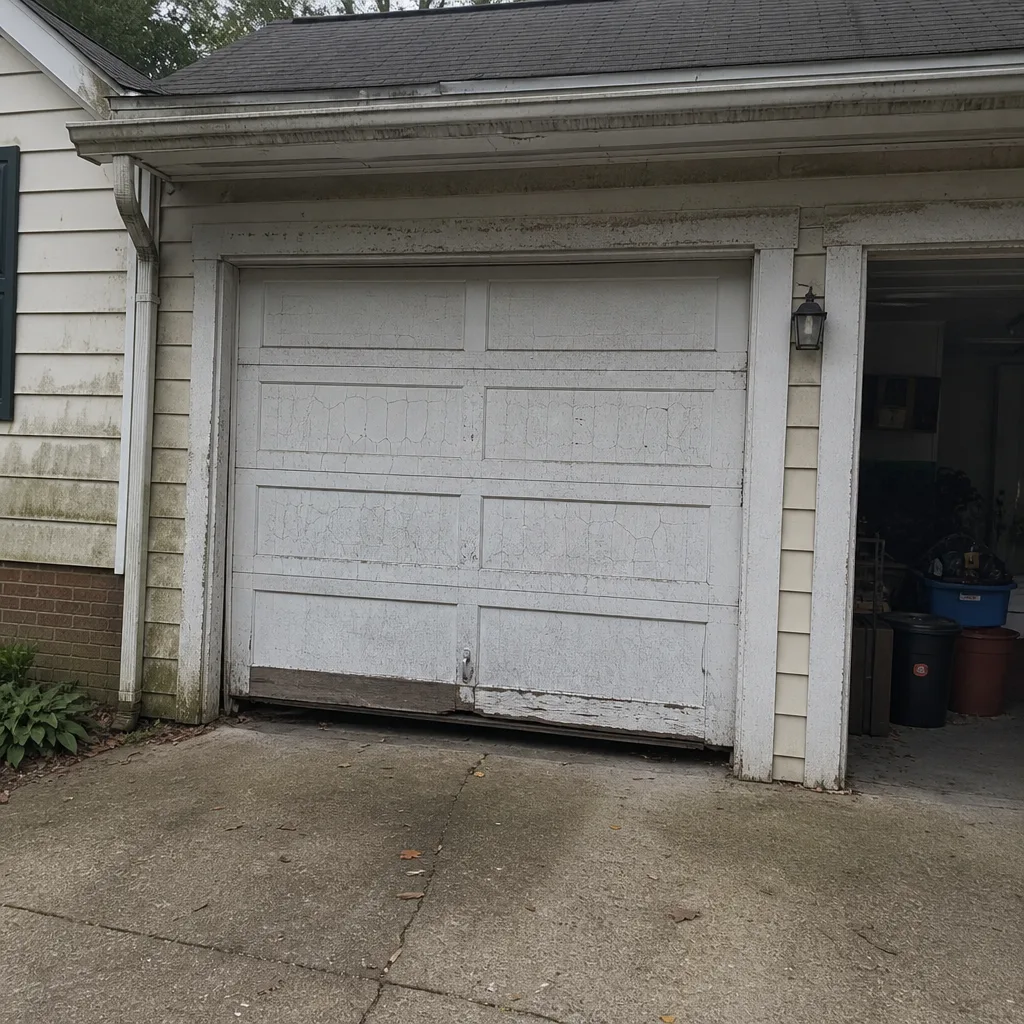 Before
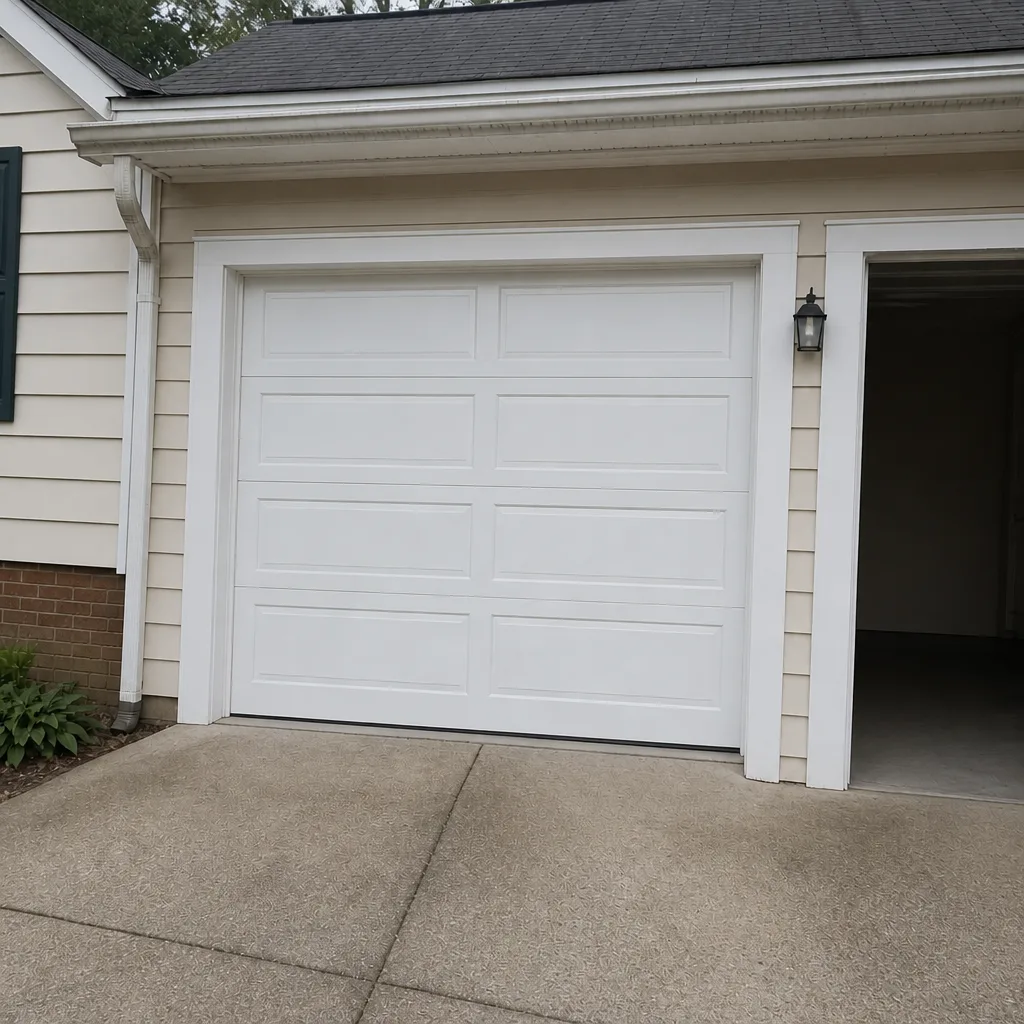 After
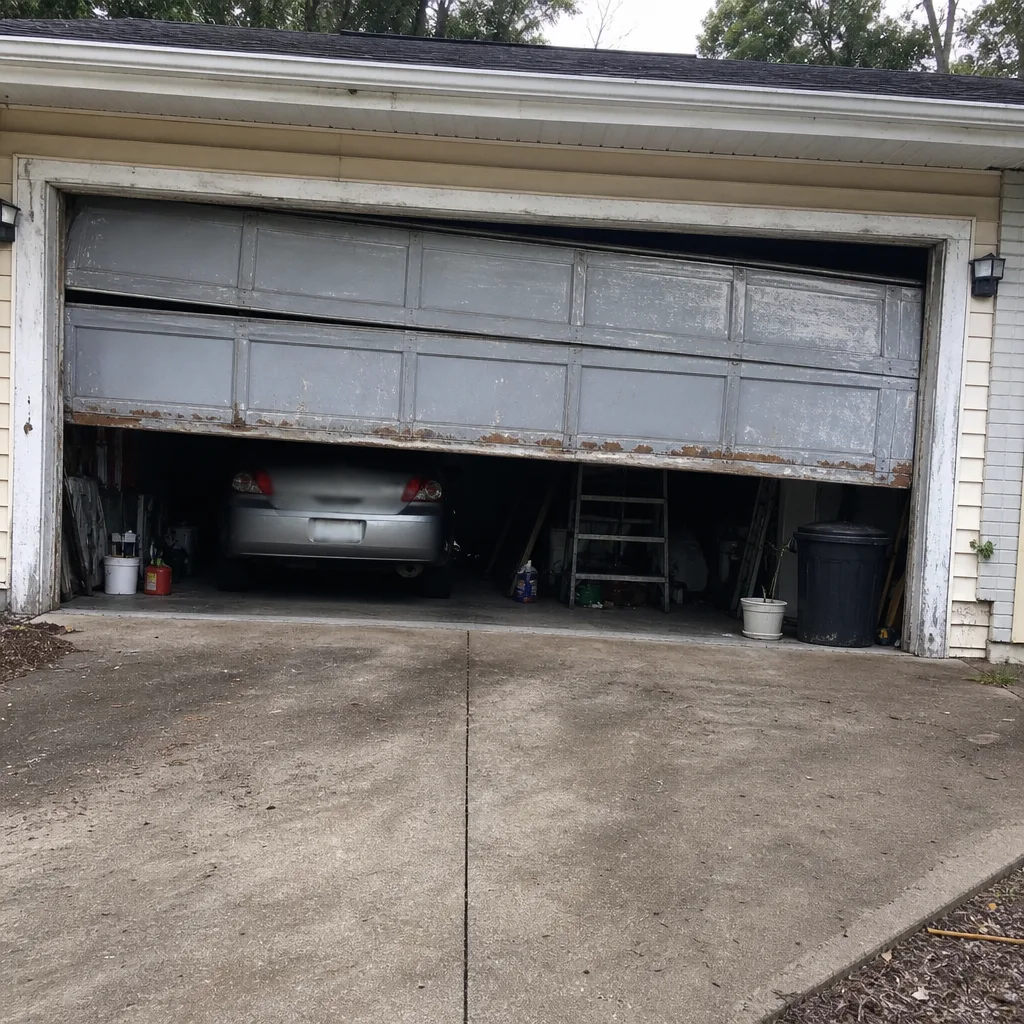 Before
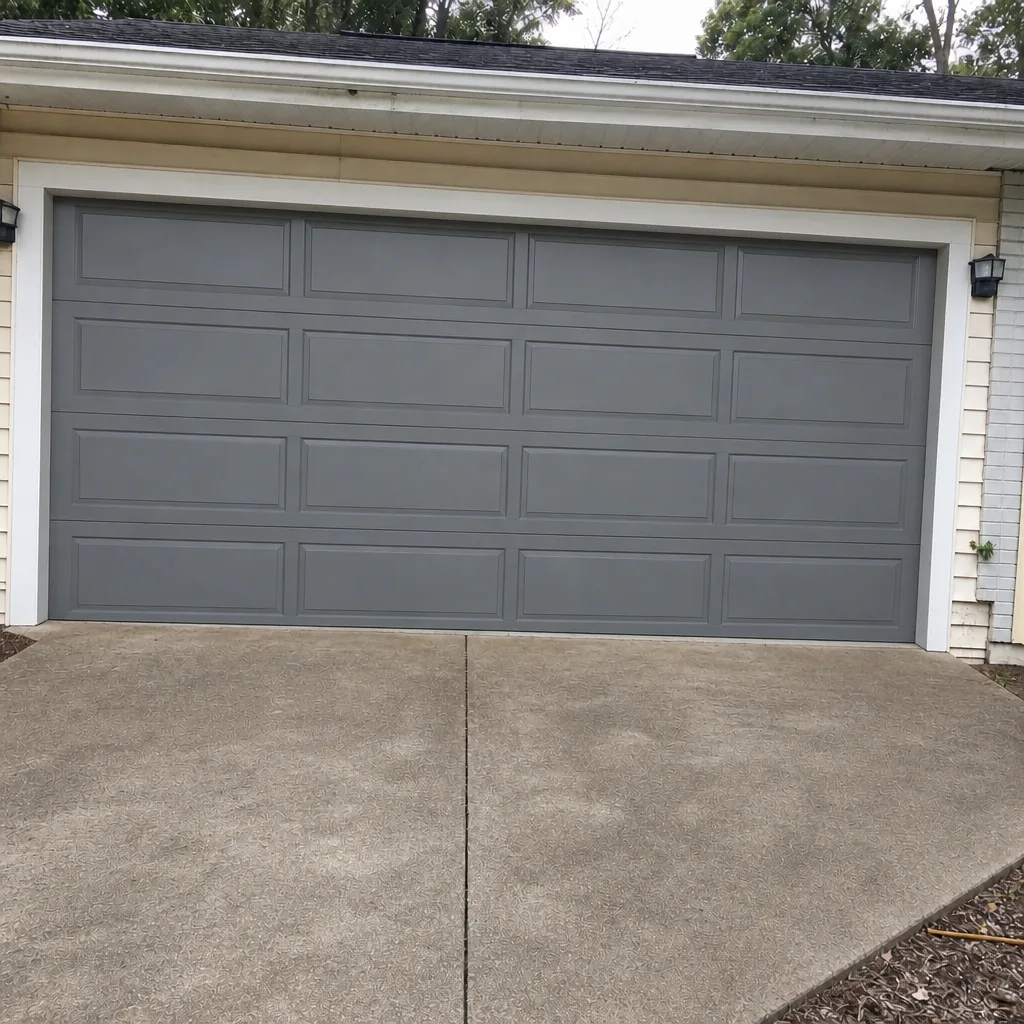 After
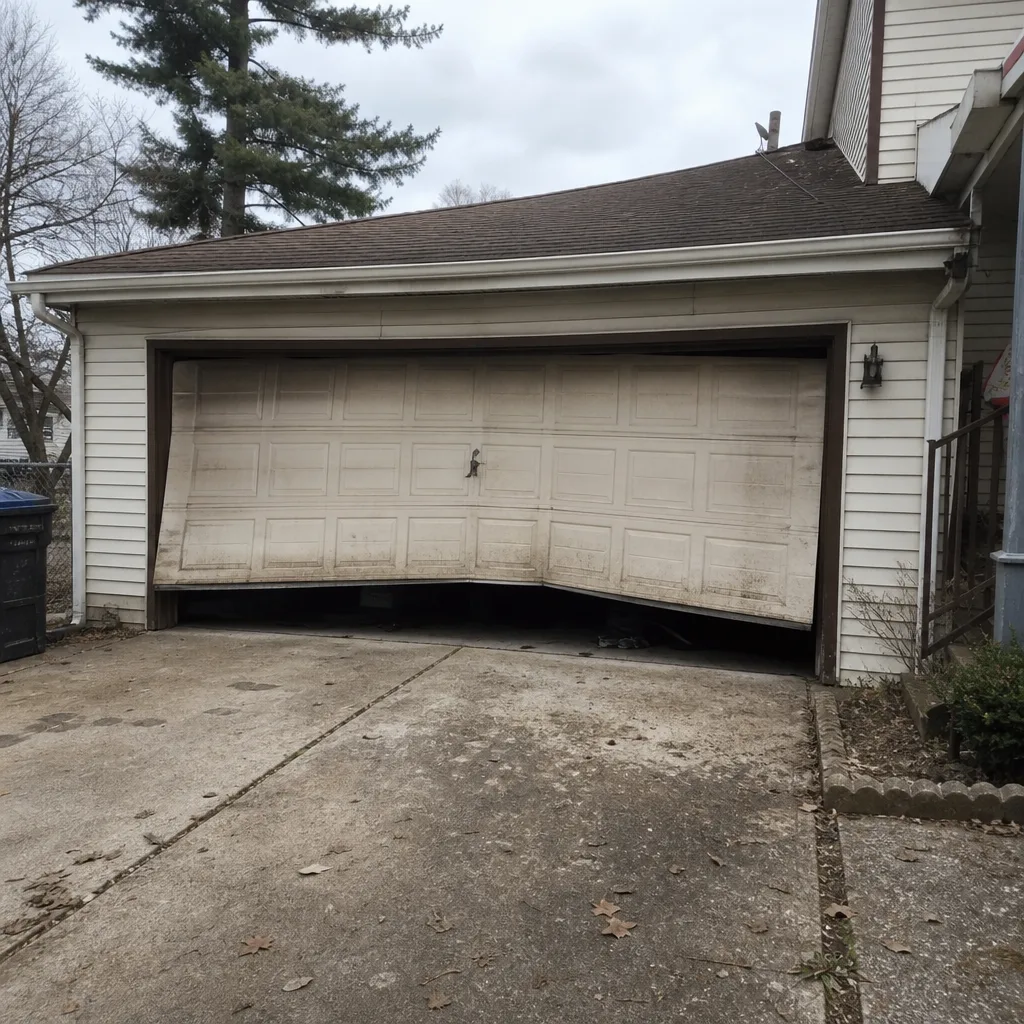 Before
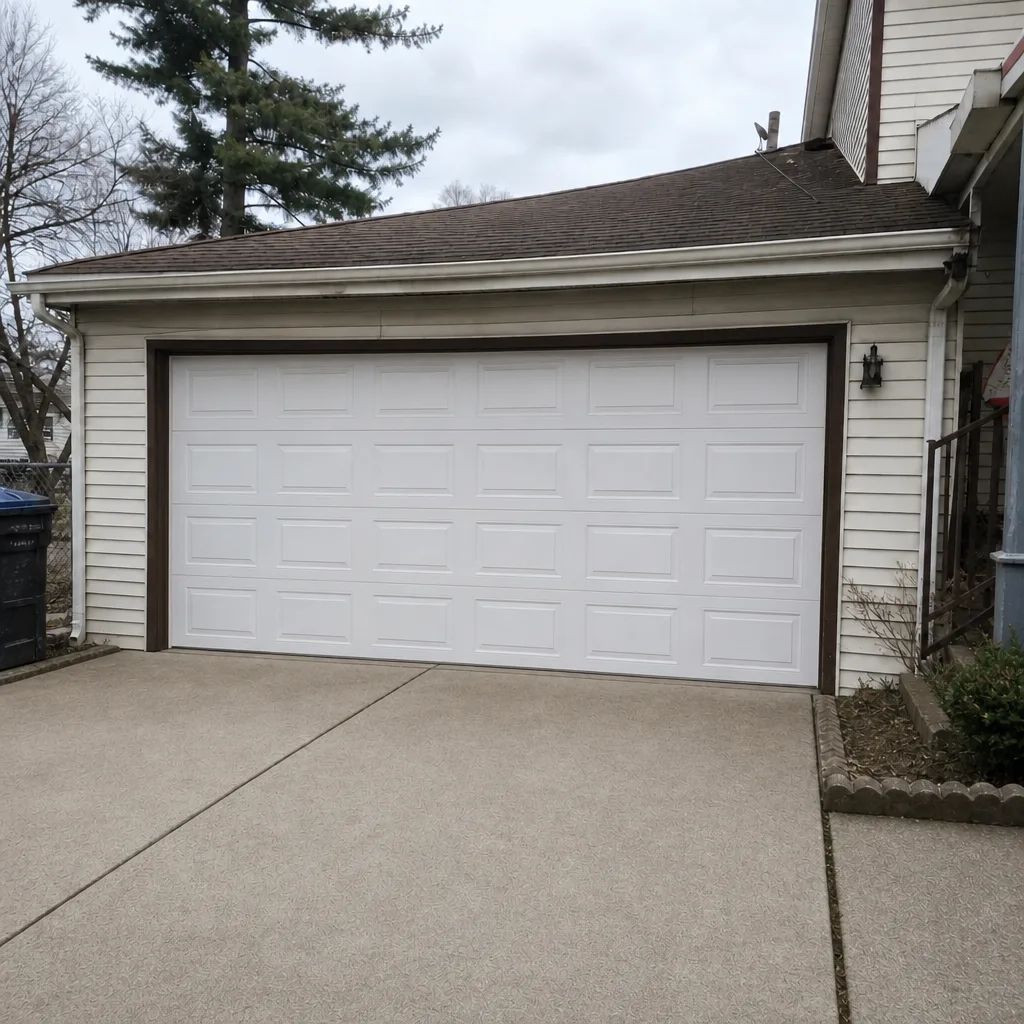 After
When to Call a Professional
Call a professional any time a task involves relieving tension, releasing stored energy, or working on a component that could injure you if it moves unexpectedly. That covers torsion springs, extension springs, cables, bottom brackets, drums, and panel replacement that requires spring disconnection. Call us immediately if a spring has snapped or a door is off its tracks – those are emergencies and warrant emergency response, not a weekend project. And call us if you’re not sure whether your task is on the safe list. Free estimates are available in Oxford Circle – call (855) 658-4215 and we’ll tell you which side of the line your repair falls on. That conversation costs nothing and could save you a trip to the ER.
Frequently Asked Questions
No. Torsion spring replacement requires controlled release of stored energy equivalent to a swinging sledgehammer, professional-grade winding tools, and knowledge of what to do if a rod slips mid-job. Even experienced DIYers should treat this as a professional-only task. Extension springs are slightly different in how they store energy but still require full tension relief – the same rule applies. Call (855) 658-4215 for spring repair; we handle it as a core specialty.
Lubricating rollers, hinges, and tracks (with grease on rollers and hinges, not on the tracks); tightening exposed bolts; realigning photo-eye sensors; replacing remote batteries; and performing the balance test. Those are the only safe DIY tasks, and none of them require special tools beyond a socket set, screwdriver, and lubrication spray. Our technicians have up to 13 years of experience across LiftMaster, Chamberlain, Genie, Clopay, Amarr, Wayne Dalton, Craftsman, and Raynor products, and we’re happy to walk you through which tasks fall on the safe list.
It depends on the manufacturer and the specific repair. Many brands require professional installation or repair to keep the warranty valid, particularly for spring, cable, and structural components. If the warranty matters, treat that as a professional job. Calling us for a free estimate lets you compare the warranty impact against the DIY savings before you commit.
Repair costs vary by the task: minor adjustments, photo-eye alignment, and opener resets typically land in a modest range; spring replacement, cable work, and panel repair cost more because of parts and labor. We give written estimates before any work begins, so you know the price before anything is touched. Call (855) 658-4215 for an exact quote – estimates are free.
Yes, if it’s a genuine emergency. Broken springs, snapped cables, and doors off their tracks are the situations we handle as emergency service. If your car is trapped inside, say so when you call. Non-emergency tasks (photo-eye alignment, opener resets, cosmetic issues) are best handled with a scheduled appointment rather than an emergency call.
It depends on the manufacturer’s distribution model. Brands like LiftMaster, Chamberlain, and Genie have broad consumer-facing parts availability for openers and remotes. Door-specific parts for Wayne Dalton, Clopay, Amarr, and Raynor usually need to come through an authorized dealer channel, which means homeowner DIY access is limited. If you can’t find the part for your door, that’s a sign to call rather than substitute.
The Bottom Line
The DIY vs. professional question for garage doors is not about skill level – it’s about understanding which components carry injury risk. Lubricating rollers, tightening bolts, realigning sensors, and checking balance are safe, cheap, and worth doing yourself. Torsion springs, extension springs, cables, bottom brackets, and drums are a different category entirely, and no tutorial makes them safe to handle without training. In Oxford Circle, the hidden costs of DIY mistakes – emergency calls, panel damage, voided warranties – usually outweigh the savings from the safe-DIY side of the equation. Get a free estimate before you decide.
Whether you’re stuck with a broken spring, troubleshooting an opener you can’t quite diagnose, or planning a new door install, we work on your brand and we know it well. Our technicians are experienced with LiftMaster, Chamberlain, Genie, Clopay, Amarr, Wayne Dalton, Craftsman, and Raynor products, and we’re set up for both emergency and scheduled work. Call (855) 658-4215 for a free estimate today – we’ll tell you honestly whether your job is a DIY one or a professional one, and we’ll back it up with a written quote agreed before any work begins.
Written by the team at Garage Door Repair Oxford Circle.